
How to Set and Get Big Goals: Five Lessons From Anita Phillips' Mountain Race
Mindset · From Student of the Game
How to Set and Get Big Goals: Five Lessons From Anita Phillips' Mountain Race
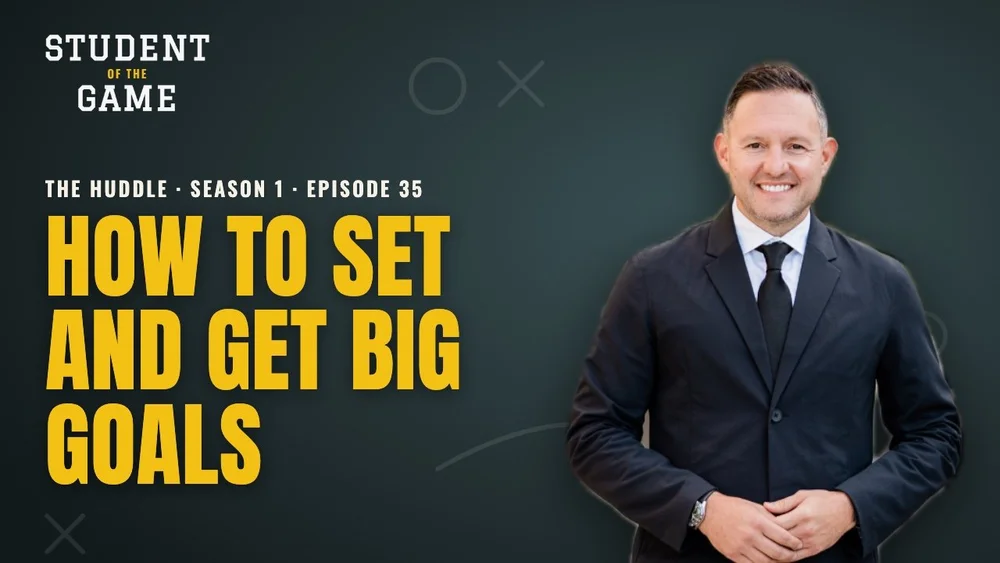
Brad Noll likes to double down on what he learns. After a Student of the Game interview, he often records a Huddle, a short solo episode where he pulls out the lessons that stuck with him and applies them to his own business and team. This time the subject is big goals, and the example could hardly be bigger.
Anita Phillips is a lawyer, consultant, and business coach, and she recently finished in the top 10 of her age group at the Ultra-Trail du Mont-Blanc, a trail race through the French, Italian, and Swiss Alps. Brad describes roughly 110 miles of running with about 32,000 feet of elevation gain, completed in 40 hours and 12 minutes with only three hours of rest. She started trail running just three years ago.
Brad interviewed Anita the week before her race. In this Huddle he looks at how she set that goal and went after it, and he breaks her approach into five lessons: self-belief, time investment, structured planning, community support, and mental strength.
Big Goals Shape Who You Become
Brad opens with a few honest questions. Have you been on a plateau for a while? Do you feel like your work isn't stimulating you anymore? Is there something you're scared of? Sometimes, he says, the answer is to set a goal big enough to stretch you.
He tells his kids the same thing he tells his team: "I set big goals because of the person that I have to become that achieves those." He points to a line he credits to Jim Rohn about becoming a millionaire not for what you get, but for who it makes of you. The same goes for writing a book. Do it for the creative process and the deep thinking it demands, and if you are going to do it anyway, aim high.
“I always tell my kids, I set big goals because of the person that I have to become that achieves those.”
Brad Noll
Self-Belief Comes From Doing
Anita drew on past experiences to build the confidence to take on something new. Brad asks listeners to do the same. Where in your past did you feel self-belief? Maybe it was a show and tell in grade school that made you nervous, but you did it anyway. That feeling of finishing, the moment your chest hits the ribbon, is where confidence starts.
Brad's point is simple: "Talk is cheap. You got to do stuff." He admits he can catch himself scrolling past a great video and feeling like he accomplished something when he didn't. "Repetition creates self-belief," he says.
He applies it directly to his real estate team. "The sales that you have today are because of the work you did six to 12 months ago," he says, pointing to the relationships, connections, and introductions that come long before a closing. And as you become more valuable, you attract people who want to be served by you.
Time Investment and the Plateau
Anita's second lesson is that big goals require a deliberate and sometimes sacrificial allocation of time. Brad's picture for it comes from childhood: his mom putting dinner in the crock pot before church and the house smelling amazing when the family got home. "Anything worth doing takes time," he says. You don't get that from a microwave.
The harder truth is that much of that time is spent on a plateau. "We only see people at their peaks," Brad says: the trophy, the sales award, the big month. What goes unseen is the work behind it. When Brad looked back at 21 years of his own sales, he found four or five plateaus, stretches of three or four years where growth stalled.
Mastery by George Leonard, a book someone gifted him, reframed those seasons. Leonard writes that a life of mastery will mostly be spent on the plateau, and that trying to escape it leads to restless, distracted effort. Brad asks whether we have wanted "the prizes over procedures" or "the ribbons over the routines." His encouragement: "When you commit to the time it takes to achieve big goals, you will own it forever."
He lived this during the recession. He had just changed companies, his family had moved into a bigger house, and his wife had started staying home with their kids. They fought their way through it, and Brad says many of the things he does well today come from that hard stretch.
Structured Planning: Don't Go It Alone
Anita broke a huge task into manageable steps. Brad keeps this lesson short: hire a coach, find a mentor, find a leader. Real estate is an isolating business, he says, and one of his team's core values is win together. "I do not believe greatness can happen in isolation."
He borrows a line from Tiger Woods, who said he hired a coach because he couldn't see himself swing. One of the best lessons Brad has learned from his own coaches is how to mind map, putting ideas on paper so he can structure his time and activities around the next most logical step. That kind of help applies to health, relationships, faith, business, or finances.
Community Support and Helping Others Win
Building and relying on a network of support makes the road to a big goal easier. Brad calls his community, starting with his family and friends, the single greatest asset in his life. In business, that community shows up as a database of the people his team has served.
When people ask how he built his business, Brad answers with an acronym: H.O.W., help others win. "Helping others win is the fastest way to grow community," he says. He compares a community to a bank account. Make more deposits than withdrawals, but don't be afraid to ask for help when a goal needs more than you. "Making a withdrawal is the oxygen you need to chase your dreams."
Mental Strength in the Pain Cave
The final lesson is developing the mental fortitude to endure discomfort, which Brad says matters in both sport and business. A Division I basketball player who went straight into business, he says he earned a master's degree from the locker room. He cites a friend's idea of the mind gym: "The body has limits, but the mind is limitless."
Brad reads a post from Anita's husband, written near the end of the race. At the last aid station before the final hard climb, her crew gave her hot tea, antacid tablets, and a loving but stern talk. He wrote that she was past eating, drinking, caring, and thinking, and was firmly in the realm of doing.
Most of us, Brad notes, focus on what is hard in the moment instead of the finish line. He points to Duke coach Kara Lawson's phrase "handle hard better" and asks listeners to start looking forward to the plateaus of life instead of dreading them.
How Do You Set a Big Goal and Actually Reach It?
Brad's framework from Anita's race comes down to five habits that work for any big goal, in business or in life:
- Build self-belief through repetition, not talk.
- Budget real time for the goal, and expect to spend much of it on a plateau.
- Break the goal into steps, and get a coach or mentor to help you see your own swing.
- Invest in your community before you need it, then be willing to ask for help.
- Train your mind to endure discomfort and keep your eyes on the finish line.
Anita reached her finish line three years after she started trail running. Brad's closing challenge is to think about where you want to be three years from now, and what you are going through today that could shape you for it. "Go out there and be great," he says. "Because I'm cheering for you."
▶ Listen to the full episode
The Huddle with Brad Noll: How to Set and Get Big Goals, on Student of the Game.
Work with the Noll Team
Ready to make your move?
Since 2003, Noll Team Real Estate has been helping people in the Fort Wayne area find the freedom to live the lifestyle they want. Tell us where you are headed and we will build the plan around your life.