
James O'Connor on NIL: What Parents, Athletes, and Small Businesses Should Know
Sports and Coaching · From Student of the Game
James O'Connor on NIL: What Parents, Athletes, and Small Businesses Should Know
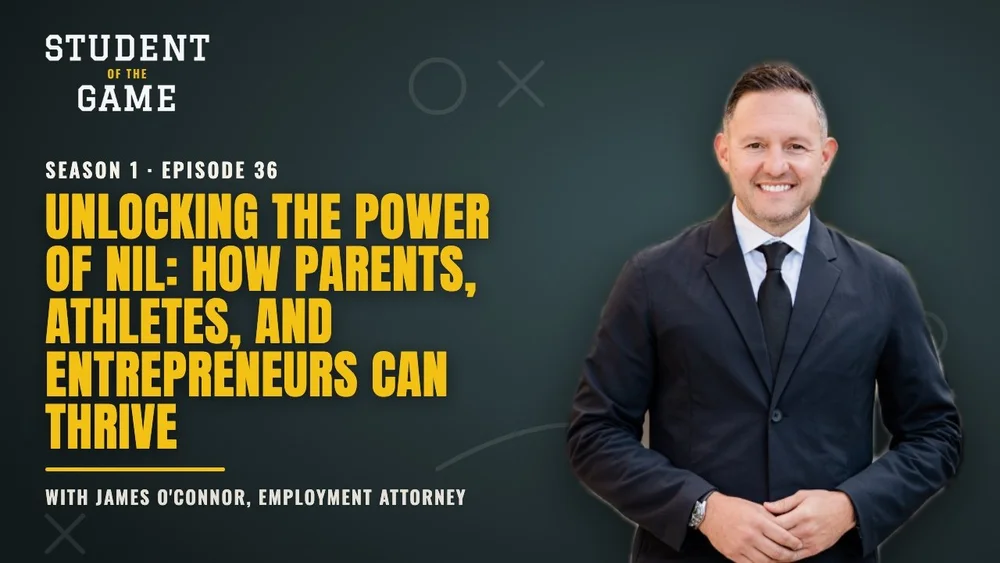
Name, image, and likeness has changed college sports, and most people still have more questions than answers about it. On this episode of Student of the Game, Brad Noll brings in someone who works in the middle of it every day: his longtime friend James O'Connor.
James practices employment law, consulting with clients on compliance and advocating for them in litigation. He has also been a registered civil mediator for 13 years, and in the NIL space he has drafted policies for universities and marketing agreements for both commercial vendors and student athletes. The two met back in 2004, and their friendship runs deep. James and his wife won a baby name contest Brad and his wife, Lindsay, held with their clients, which means they picked the name of Brad's middle daughter, Delaney.
Brad calls it the perfect story to open a conversation about name, image, and likeness. A good name and a good reputation, he says, are some of the only things we keep forever.
Where NIL Came From
James explains that NIL comes from the right of publicity, which not every state recognizes. For years the NCAA prohibited athletes from being paid for their name, image, or likeness on the reasoning that it would amount to illegal recruiting. Technology changed the picture. A YouTube influencer living in the dorm room across the hall could make money online, while a student athlete could not. Athletes going back to the O'Bannon case sued, arguing the rules were anti-competitive, and the rules officially changed in 2021.
Brad sums up the mindset he wants listeners to start with. "Money is neutral. You can do good with money. You can do bad with money," he says. "NIL is neutral." It is not just a way to pay players. It is a tool, and what matters is how people use it.
“I have argued that one unintended benefit to an NIL relationship is it introduces the business to the student athlete at a very early stage.”
James O'Connor
The ABCs of NIL
To help people understand the new rules, James created a simple framework he calls the ABCs of NIL. "It's not that it's fundamentally difficult to understand," he says. "It's just that it's new."
- A is for agents and attorneys, who can negotiate, review, or paper contracts between an athlete and a vendor partner.
- B is for banned industries. Schools generally keep athletes from promoting vices such as alcohol, drugs, nicotine, and gambling.
- C and D are conflicts and disclosures. If a competing brand approaches an athlete at a school with an apparel partner, the athlete discloses it, and personal deals stay outside official team activities.
- E is for employment and what employment status means for an athlete.
- I is for international athletes and how NIL affects them.
- S and T are scholarships and taxes. Many young people do not yet understand taxes, and the IRS expects income over $600 a year to be reported.
The goal, James says, is to educate everyone in the chain, from the athlete and coaches to administrators and marketing partners, so they can run a compliant program.
How Small Businesses Can Use NIL
For a business, an NIL deal is marketing. It lets a company work with an athlete anywhere from NCAA Division I down to the NAIA level and use that athlete's platform to build brand awareness. James offers an example from Indiana Wesleyan University in Marion: a local pizzeria that knows the star basketball player has a big following could offer a share of the night's sales if the player brings a crowd after a game. That, he says, is a totally legitimate NIL transaction.
He also sees a benefit most people miss. Student athletes have a shelf life, and most will not play professionally. "I have argued that one unintended benefit to an NIL relationship is it introduces the business to the student athlete at a very early stage," James says. Every business is recruiting talent, and an athlete who has been taught values, fundamentals, and leadership could become a future hire. Brad agrees. It is the idea the whole podcast is built on: relationships win.
Not everyone qualifies, though. At the time of recording, James notes that Indiana has no NIL law, so high school athletes fall under the Indiana High School Athletic Association's amateur rules, which make an athlete ineligible for trying to make money from participation.
More Than Money at Purdue Fort Wayne
Brad and James have both been involved with the collective that supports Purdue Fort Wayne men's basketball, and they say some of its best work has nothing to do with paychecks. Members take players to lunch and mentor them. Some players have gone on fishing trips, and some have gotten help with housing. James enjoys giving athletes exposure to a lawyer or business owner who can broaden their horizon on "how achievable an American dream can be."
The program has also leaned into community service. Brad shares that the players logged more than 300 community service hours over the summer, including time at the downtown YMCA, the Boys and Girls Club, and local clinics and camps. Brad's team is planning a client event with players signing autographs, and he encourages local businesses to think beyond donations to job shadowing, internships, and service projects.
Brad has a personal connection here. He moved to Fort Wayne to play college basketball, stayed, and has spent 21 years in real estate helping more than 2,000 families move. "I'm not from here, but I'm not leaving," he says.
Advice for Parents of Athletes
For families with talented kids, James uses a business analogy. "That player is the business," he says, and most businesses are run by a board of directors. Parents may sit on that board, but if they do not have experience in finance, compliance, marketing, or business development, they need trusted people who do and who have the spirit of a teacher.
That due diligence can shape recruiting, too. Families sometimes ask James how NIL rules differ across the states where their top schools are located. The biggest deal is not always the right choice. There may be very good reasons to take less money for a better culture.
Brad adds a lesson his college teammate, Keion Henderson, shared with Brad's daughters about social media. Why does a fast food chain sell more burgers than their dad, even though his are better? Because "the best known usually beats best." If you don't create your brand for yourself, someone else will. Brad frames social media around helping others win, not "look at me."
How Can a Small Business Build a Brand Like an Athlete?
Brad pictures two landscapers. One is great at the work but has no following. The other teaches people how to edge and care for their lawn online, and his business takes off. Brad encourages business owners and his own team to get in front of the camera and share client success stories, even if they don't love how they look or sound. "You look how you look and you sound how you sound," he says.
James ties it back to athletes. Most student athletes do not have staff creating their content, so the ones who learn to do it build skills outside their sport. "If you have put your fundamentals into being able to grow the best grass, then you probably haven't had the time to create the best digital content," he says. Partnering with someone who has the platform and the skills is a win for both sides.
When Brad asks what winning looks like, James points to family, career, and community: a wife who believed in Fort Wayne early, three daughters he gets to invest in, and a career that "inherently involves solving other people's problems." Fort Wayne, he says, is a two degrees of separation kind of place, and he is always glad to meet the next person who could use good guidance.
▶ Listen to the full episode
Unlocking the Power of NIL: How Parents, Athletes, and Entrepreneurs Can Thrive, on Student of the Game.
Work with the Noll Team
Ready to make your move?
Since 2003, Noll Team Real Estate has been helping people in the Fort Wayne area find the freedom to live the lifestyle they want. Tell us where you are headed and we will build the plan around your life.