
Your Offer Got Accepted. Now What Happens in the Next 30-45 Days?
Buying a Home · From Moving Fort Wayne
Your Offer Got Accepted. Now What Happens in the Next 30-45 Days?
The phone rings. Your agent is on the other end. Your offer just got accepted. Cue the high-fives, the happy tears, the texts to family. Then, somewhere around minute ten of celebration, a quieter question creeps in: what happens now?
On Episode 25 of Moving Fort Wayne, host Brad Noll sits down with fellow Noll Team Realtor Brock to walk through one of the most misunderstood stretches of the home-buying journey: the 30 to 45 days between an accepted offer and the closing table. If the search phase is the marathon, this is the sprint. And it has its own rhythm, its own paperwork, and its own emotional whiplash.
Here is what the conversation revealed, and how The Noll Team helps Fort Wayne buyers move through it with confidence.
The Emotional Peak (and the Pivot That Follows)
For Brock, the accepted-offer call is one of the most rewarding moments in real estate. "It's a total game changer," he says. "The home that we looked at and that you fell in love with, guess what? We just got an accepted offer."
Brad describes the call the way clients often remember it: "Are you sitting down right now? Get your wife. Get your spouse. Get your dog. Get your kids." It is the pinnacle of excitement.
But that excitement is a launching pad, not a finish line. Within hours, the work shifts from chasing the right house to protecting the deal you just made. And that is where a well-built team earns its keep.
Step One: Earnest Money
The first concrete action after acceptance is submitting earnest money, a good-faith deposit that signals you are, in Brock's words, "a ready, willing, faithful buyer."
This is not a side note. It is a contractual obligation tied to a specific deadline inside the purchase agreement. Miss it, and you put the entire transaction at risk. The Noll Team's client care team flags this immediately so nothing slips through.
Step Two: Commit to Your Lender
If you have been shopping rates between two or three lenders, this is the moment you choose one. Brock points to a document called the intent to proceed, which formalizes the relationship and unlocks the next round of paperwork: W-2s, bank statements, pay stubs, and any remaining items needed for final loan approval.
Brad's advice is blunt: ideally, your financial documents should already be in your lender's hands before you ever write an offer. If not, this is the moment to send them.
Step Three: Lock In Homeowners Insurance Early
This is one of the most significant shifts Brad has seen in his 23 years in the business. Insurance used to be a last-week-before-closing task. Not anymore.
"Homeowners insurance has changed dramatically over the last few years," Brad explains. "Prices have gone up, insurance policies have just changed." The purchase agreement now includes a deadline for securing coverage, and the market is unpredictable enough that shopping early protects both your wallet and your timeline.
The 492-Line Document Behind Every Deal
Brad pulls back the curtain on what an accepted offer actually contains: a 9-page purchase agreement, 492 lines of language, and 76 decision points that dictate who pays for what and when each obligation comes due.
"Your offer that gets accepted is laced with timelines. It's laced with who pays for what," Brad says. This is why The Noll Team built a dedicated client care team to quarterback the back end of every transaction.
"It is a concierge service," Brock explains. "The people that are going to take care of you from contract to close are going to make sure everything's in line as far as due dates to get done." Inspections ordered. Appraisals scheduled. Deadlines met. Nothing left to chance, and nothing left for the buyer to chase down on their own.
The Home Inspection: Where Emotion Meets Reality
The inspection is where the emotional rollercoaster takes its sharpest turn. After the high of acceptance, buyers come face-to-face with the home's reality, often through a 50-page report.
"It could be, oh my gosh, I'm so glad I got it," Brock says. "Or I've had it where it's deflated some buyers too."
Brad's framework helps clients stay grounded. Inspection findings fall into three buckets:
- Major defects: structural, mechanical, or safety issues. These are the items the seller is asked to correct. If they refuse, the buyer can walk away and keep their earnest money.
- Cosmetic defects: scratches, stains, scuffs. Negotiable, but not deal-breakers.
- Maintenance items: a light switch that does not work, a loose handle. Low-hanging fruit that can be addressed but rarely derails a deal.
The point, Brad emphasizes, is to give the seller a fair chance to address the major issues. Walking away without offering that opportunity can cost you your earnest money.
The Appraisal: The Third Round of Negotiation
Earnest money, inspection, appraisal. Brock calls these the three sticking points of the post-acceptance phase.
The appraisal protects two parties: the buyer, by confirming the home's value, and the lender, by safeguarding the loan. If you are paying cash, you can skip it. If you are financing, your lender will almost always require it, though buyers with strong credit and significant down payments may receive an appraisal waiver.
Brad offers a long-view perspective worth pausing on: "I've lived in my home for 18, going on 19 years now. I would have overpaid for my house five times over." The appraisal matters most when timelines are short. The longer you stay, the more the market tends to catch up to your purchase price.
Clear to Close, Possession, and the Finish Line
Once the lender delivers the magic phrase "clear to close," the path to keys is open. One newer wrinkle Brad and Brock both flag: post-possession agreements. More sellers are asking for a few extra days in the home after closing to finalize their own move. This is negotiated upfront, inside the original offer, not days before closing.
The takeaway: every term, every timeline, every contingency is set at acceptance. Preparation is everything.
The Noll Team Difference
With 26 people involved in the average real estate transaction, the realtor is the quarterback. The Noll Team's mission, as Brad puts it, is to "help you save time, reduce your stress, and help you keep as much money in your pocket as possible."
That promise lives or dies in the 30 to 45 days after acceptance. It is where steady communication, deep process expertise, and a true client care team turn a stressful stretch into a smooth one.
Listen to the Full Episode
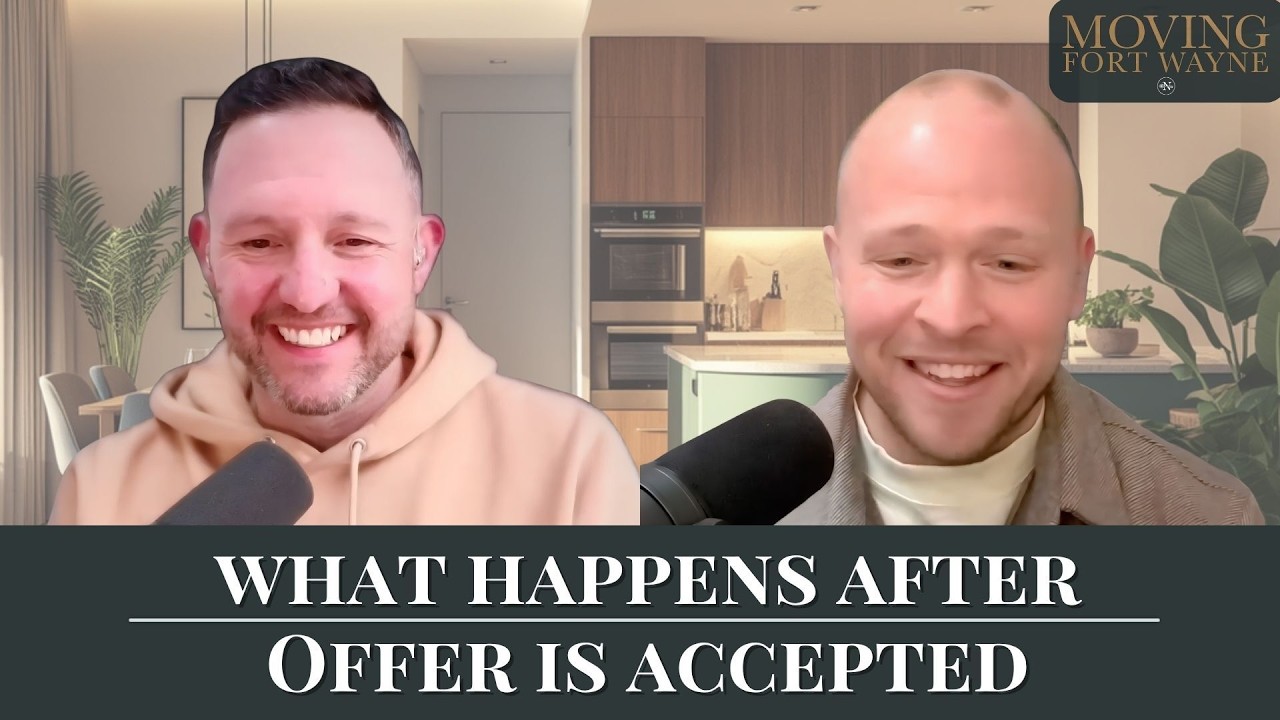
▶ Listen to the full episode
What Happens After The Offer is Accepted with Brock Noye, on Moving Fort Wayne.
Work with the Noll Team
Ready to make your move?
Since 2003, Noll Team Real Estate has been helping people in the Fort Wayne area find the freedom to live the lifestyle they want. Tell us where you are headed and we will build the plan around your life.