
Olympian Charles Fernandez on Transitions, Presence, and Grace
Mindset · From Student of the Game
Olympian Charles Fernandez on Transitions, Presence, and Grace
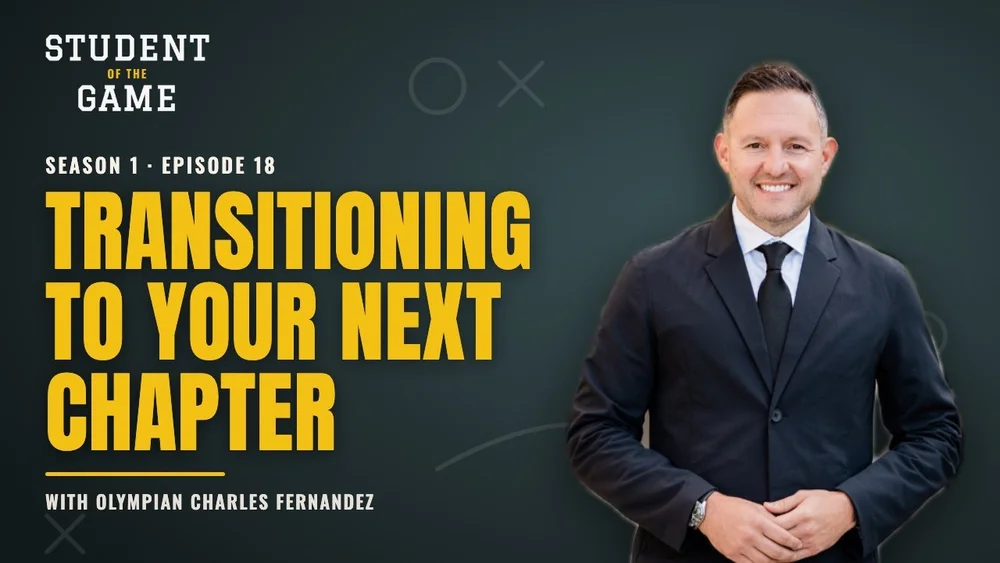
Brad Noll's family chose connect as their word for the new year, and he opened season two of Student of the Game by connecting with a new friend: Charles Fernandez, the show's first Olympic athlete. Charles competed for Guatemala in modern pentathlon, a sport that combines running, swimming, shooting, fencing, and equestrian show jumping. As Brad puts it, most Olympians compete in one sport. Charles competed in five.
Brad chose this conversation to start the year on purpose. January is a season of transition, and Charles has spent the past two years in one of the biggest transitions a person can make, from elite athlete to human performance coach. Whether a listener is facing a new job, a health diagnosis, a career change, or a bigger quota, Brad says, everyone is going through some kind of transition.
A Dream He Had to Choose
Charles started the sport at 12, went professional at 14, and left school to focus on it. The Olympics was not a childhood dream. He simply knew he had gifts and wanted to see how far he could take them by investing in them and setting goals.
Before he went all in, his dad sat him down. Charles had the talent and the opportunities, his father told him, but this could not be a dream his dad or anyone else placed on him. Charles had to decide for himself. That decision carried him through ten years, plenty of sacrifice, and two Olympic Games, in Rio and in Tokyo. Along the way he became a world champion and won two gold medals at the Pan American Games, becoming the youngest athlete to win gold in his event.
He could have pursued another Olympics. Instead, he retired and chose a path he believed would bring more fulfillment and lead him closer to his long-term goals.
“There's nobody that doesn't feel pressure. There's nobody that doesn't feel anxiety. Everybody, no matter what you've achieved in life will always feel those same emotions.”
Charles Fernandez
Transition Starts With Honesty
Charles asks Brad to imagine being told that next week is his last week in real estate after more than 20 years, and that whatever comes next cannot involve real estate. That would shock his identity, his purpose, and his family's future. That is what leaving sport felt like after dedicating more than half his life to it.
The first step, he says, is recognizing where you really are. Many people are not honest with themselves, because the reality they believe in is only the best version of themselves or of the outcomes they hope for. "When you can realize the good, the bad, the ugly, the pretty, the positive, the negative, you're in a situation where you're able to take control of the atmosphere around you," he says. He had to look again at his values, vision, strengths, and talents and ask how to use them now that his body could no longer be the tool.
Brad hears two fundamentals in that answer: identity and mindset. School taught chemistry and biology, he notes, but rarely how to deal with anxiety or calm the mind.
Trust the Process and Fail Fast
How do you stay calm when you are handed a horse you have never ridden, or when you have to run and shoot at the same time? Charles says it comes from practice. Like driving a manual car, everything technical should become automatic through years of repetition, so in the moment you can handle the emotions and pressure instead of thinking about technique.
He is also honest that no one escapes pressure or anxiety. What separates top performers is how quickly they confront it. Charles likes the phrase fail fast. People who achieve great things often fail more than anyone else, but they recognize the situation, face it, and move past it rather than staying stuck.
Micro Decisions and the Power of Presence
The big picture is fun to look at. Falling in love with practice is the ugly part, especially when starting something new or changing a lifestyle you have not been happy with. Charles says long-term results come from micro decisions: habits, consistency, discipline, and doing small things with excellence and purpose.
Focusing on results, especially during a season where nothing seems to move, leads people to believe they deserve a prize. "We don't deserve anything," Charles says. You show up in hope. Then he shares the phrase Brad stops the conversation to repeat: "To be present is to be powerful." The more present you are today, the more influence you have on your dreams. That includes controlling your atmosphere: who is around you, what is speaking into you, and how intentionally you use your time, even when the intention is to rest.
For high achievers with too many goals, Charles offers a warning. Once you reach the next big thing, there is nothing more. He reached the top of his sport by his mid-twenties, and what carries him now is a foundation of values, faith, family, and love. His practical advice for anyone setting goals this year:
- Build your life on values that will outlast any single goal.
- Do not let the moments to enjoy life slide by while you chase the next objective.
- Accept that balance will not always be there, and come back to who you are and what you live for.
- Measure your life mission by fulfillment, not by a number.
- Focus on how you treat and love people today, not the next deal to close.
Letting Go of Perfection
Charles admits his own transition was hard. For years he lived an image of perfection because he was an example to many people, and that image clouded who he really was. He does not want to be perfect in the eyes of the world. He wants to be real, connect with others, and remember that he is no different from anyone else. Even today, with two Olympics and more than 50 countries behind him, he sometimes doubts he will reach his biggest goals, and he is at peace with that as long as he keeps moving toward them.
Brad adds a word of encouragement. Charles's transition took two years because his identity ran so deep. If you are going through a job loss or a health challenge, yours may take a while too, and that is okay. During the pandemic, his family set seven-day goals, planting a garden and cooking over a bonfire, because every week was its own transition.
What Does Winning at the Game of Life Look Like?
For Charles, winning is offering help, opportunity, and love to the people around him, and extending the same grace that was extended to him. He wants to live a life of impact rather than urgency, and to leave a legacy that may be carried on by one person he helped. Brad takes the idea one step further: when you are present, you can give yourself grace, and you can give grace to everyone else going through a transition, too.
Charles closes with a quote from marathon great Eliud Kipchoge: only the disciplined ones in life are free. Brad, a self-described recovering free spirit, loves it. Charles sends his flowers to God, his parents, whose faith and hope set a high bar, and his brother, who supported him through this season.
▶ Listen to the full episode
Transitioning to Your Next Chapter with Olympian Charles Fernandez, on Student of the Game.
Work with the Noll Team
Ready to make your move?
Since 2003, Noll Team Real Estate has been helping people in the Fort Wayne area find the freedom to live the lifestyle they want. Tell us where you are headed and we will build the plan around your life.