
Joe Pechota on Winning Practice, Daily Habits, and Handling Hard Better
Sports and Coaching · From Student of the Game
Joe Pechota on Winning Practice, Daily Habits, and Handling Hard Better
For this episode of Student of the Game, Brad Noll welcomes a coach who shaped him directly: Joe Pechota, his college basketball coach and now the head men's basketball coach at Siena Heights University in Adrian, Michigan. Brad says the ripple effect of what Coach P did in his life is still showing up in his business 20 years later.
Coach P has coached at every level, with stops at Alma College, Ferris State University, Brescia University in Owensboro, Kentucky, and IPFW, where he coached Brad alongside Brad's father. This conversation is part reunion and part playbook, full of lessons for small business owners and anyone working a nine-to-five.
Win Practice
Coach P came to IPFW through a friend he had coached with, and he credits Brad's father for putting him in a position to use his strengths. The biggest one was practice. "I tell our players now all the time that my job is to win practice. I want to win every day in practice," he says. Game day belongs to the players, but how the team prepares and how he teaches every day is where he takes pride.
Brad says that if nobody else listens to this episode, he wants his own team to hear that line. In business, winning practice means winning the days when you are not in front of clients: making the calls, writing the notes, and building relationships.
Both men lived through the program's move from Division II to Division I, and it was not as shiny as it looked from the outside. The team was independent, without a conference, and played many games on the road against bigger programs. Coach P says the staff focused on winning the day, whatever that day held. "You have to be comfortable being uncomfortable because that's when you're going to grow the most," he says. Brad notes that business owners often expect every year to be better than the last, but real growth rarely follows a straight line.
“I tell our players now all the time that my job is to win practice. I want to win every day in practice.”
Joe Pechota
Peanut Butter and Jelly
Brad brings up a road trip to Texas. After a poor first game, the players expected their usual team dinner. Instead they found loaves of bread, peanut butter, and jelly in the front seat of the bus. Coach P admits it was his idea, and he had to talk Brad's father into it.
Then came the second message. The coaches could not get anything out of the players, so the players would coach practice themselves. Brad and the captains had to plan every minute, and it turned into one of their best practices. "I'm the one that's in control of my success," Brad says of the lesson. Coach P adds that you are the CEO of you, and the more you invest in yourself, the more you get back, good day or bad day.
Preparation was part of the culture, too. Coach P remembers scouting a tough Washington State team coached by Dick Bennett by watching VHS tapes. Brad still has his scouting book from those years. He shows it to his team and asks: what if we prepared for our Monday staff meeting the way coaches prepare for a game? What if we knew our clients so well that we could serve them at that level?
Habits Are the Foundation
When Brad asks about the fundamentals of coaching, Coach P says it starts with habits, because habits are the foundation goals are built on. He keeps a paper habit tracker he can check off each day:
- Faith: devotionals and reading.
- Family: notes for his wife, one-on-one time with his daughter.
- Health: workouts and water.
- Professional growth: reading, podcasts, and learning.
The tracker shows him exactly how many days it has been since he read or did something special at home, so he knows when to step it back up. Brad says this is why Coach P is a good leader: he leads himself first. You can only pour out to others what you have poured into yourself.
Roles, Teamwork, and Controlled Failure
Brad asks how a coach leads when one player scores 20 and the team loses. Coach P says he is a better coach now than he was at IPFW because he has learned more about people. There is a difference, he says, between calling somebody out and calling somebody up. Some team members are low maintenance. Others need a one-on-one conversation to find the speed bump holding them back.
He also teaches that everybody has a role and every role matters. "The big key is to be a superstar in that role, whatever it may be," he says. Brad connects it to job descriptions and org charts, which many small businesses skip. You cannot win with five centers on the floor.
Coach P believes it is okay to fail inside a controlled environment, and that parents, coaches, and CEOs should let people learn from it. The goal is to handle hard better. He shares a conversation with skateboarding legend Tony Alva, who said skaters fall hard and get hurt, then get up, brush themselves off, and try again the next day. Brad adds his own example: when his daughter nearly turned into oncoming traffic while learning to drive, he had her circle back and make the same turn again right away so she would leave with confidence.
Who Coaches the Coach?
Coach P jokes that his wife is the head coach in his house. Beyond her, he leans on three men for big decisions: his own college coach, his best friend, and his dad. He wants people who will tell him what he needs to know, not what he wants to hear. Brad's advice is simple: if you run a business or have a side hustle, find a coach or a mentor.
Coach P shares a few of the sayings his teams live by. Players play, tough players win, which he credits to Tom Izzo. TNT stands for toughness and togetherness. His champion's compass, which he gives to seniors, points to Willing, Next, Simple, and Every time. For him, winning is watching former players succeed as professionals, husbands, and dads.
How Can Customers Support Small Businesses?
Coach P closes with a thought for small business owners: grind and grace. Owners wear every hat, from CEO to HR to accounting, and they deserve respect for that work. Customers, he says, will give grace to a big chain when an order is wrong, then go right back the next morning. A small business might be short staffed with one person doing the job of four, yet one negative post can hurt it.
His suggestion is to give local businesses the same grace, and to treat a positive post, a like, or a share as their version of a big online sale day. Brad adds that small businesses can earn that support with exceptional customer service and deeper relationships. He sends his flowers to Coach P, a mentor he has modeled his life after, and Coach P returns them, saying the best relationships go both ways.
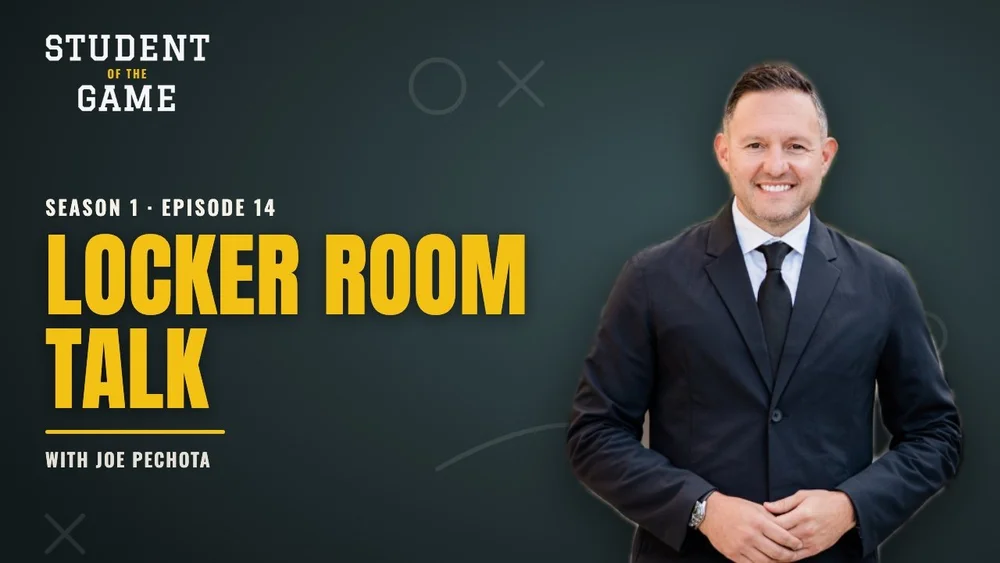
▶ Listen to the full episode
Locker Room Talk with Joe Pechota, on Student of the Game.
Work with the Noll Team
Ready to make your move?
Since 2003, Noll Team Real Estate has been helping people in the Fort Wayne area find the freedom to live the lifestyle they want. Tell us where you are headed and we will build the plan around your life.