
Falling in Love With Practice
Sports and Coaching · From Student of the Game
Falling in Love With Practice
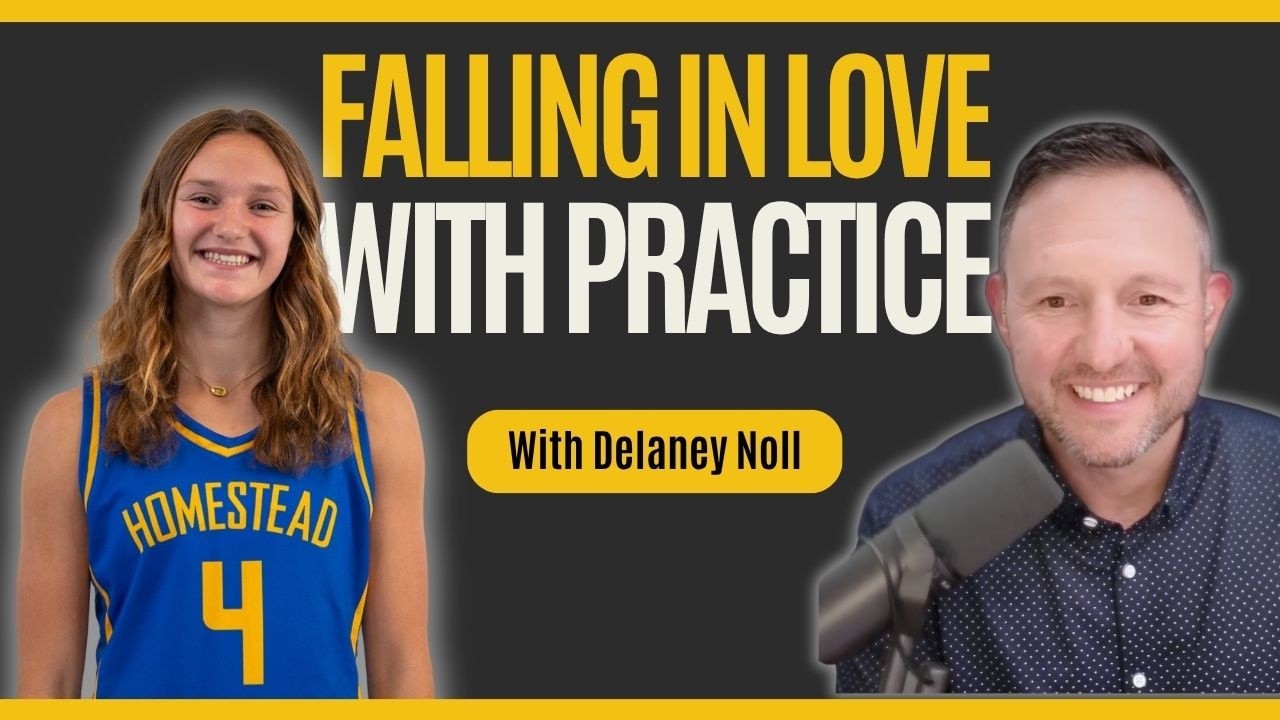
On Student of the Game, host Brad Noll likes to say he earned his master's degree in team chemistry, not the kind you find in a lab. Episode 75 puts that idea to the test with a guest who lives it every day: his own daughter, Delaney Noll, a Homestead High School basketball player in the class of 2028 with more than 20 Division I offers.
The theme is falling in love with practice, and it is not a sports cliche. It is a leadership blueprint for anyone building a business, a team, or a family who wants results that outlast a single win.
This post is for entrepreneurs, professionals, and aspiring leaders who want to master the fundamentals and grow. Below, we break down the mindset, the setbacks, and the habits that turned an "F team" player into a four-star recruit, and what each one means for your work.
Key takeaways ● Falling in love with practice, not just the outcome, is what separates the people who last from the people who fade. ● Clear values make hard decisions easier: "When your values are clear, your decisions become easy." ● Adversity only helps you if you refuse to play the victim and use it as fuel. ● Culture is measured by what a team chooses to do together, not what a coach forces. ● You have to earn the right to be hard on someone, whether you are a coach or a leader.
“You just got to practice. You got to fall in love with practice and you got to win it in the game of life.”
Delaney Noll
Why Falling in Love With Practice Beats Chasing Wins
Most people watching Delaney's journey see the offers and the following. They do not see the reps. Brad calls her "a professional practicer," and she does not flinch at the label.
"I absolutely love to practice," Delaney says. When Brad asks what she loves to practice, her answer is simple: "Everything." Team practices, individual workouts, getting to the basket, "lots and lots of shooting workouts all the time on the gun."
The lesson for leaders is direct. Everyone celebrates the sale, the launch, the championship. Far fewer people fall in love with the unglamorous, repeated work that produces those moments. If you only love the win, you will quit when the work gets boring. If you love the practice, the wins take care of themselves.
Rest Is Part of the Work
There is a counterintuitive twist here. After her AAU season, Delaney says she is "being forced to rest," and Brad stops to underline it for the adults listening.
Too many leaders wear the grind as a badge and burn out because "sleep is for suckers" becomes the culture. Working hard is one of the Noll family values, but Delaney's willingness to rest on purpose is what keeps that engine running. Recovery is not the opposite of ambition. It is the maintenance that makes ambition sustainable.
How Core Values Make Hard Decisions Easier
When Brad asks what is fundamental in her life, Delaney does not mention a crossover or a jump shot. She names her values.
Her family values, shared by all five Nolls, are "love God, family first, work hard, tell the truth and serve others." On top of those she built her own, which she calls the three B's: "believe basketball and bloodlines." Believe is her faith, basketball is her craft, and bloodlines is her family.
Brad ties this back to leadership with a line from his mentor: "When your values are clear, your decisions become easy." In his business, he says, "we hire and fire based on values, we teach and retrain based off of values." For any leader, the takeaway is that values are not a poster on the wall. They are a decision-making filter that removes friction when the choices get hard.
Turning Adversity Into Fuel Without Playing the Victim
Delaney's rise was not a straight line, and the episode does not pretend otherwise.
The F Team
In her first AAU season, the Nolls missed the tryout. Her friends made the elite team. Delaney landed on the F team, roughly 15 girls, practicing in a gym she remembers for "bugs crawling through the walls."
Her reaction is the whole point. "That just like lit a fire in me," she says. Being underrated flipped a switch: "I went from thinking I was good and wanting to be on that elite team front to being like one of the hardest workers." The lesson for professionals is that a demotion or a snub is only an ending if you decide it is one.
"Pass the Ball"
In middle school, mid-run at a scoring record with 28 points at halftime and no misses, Delaney heard an adult yell from the bleachers: "Pass the ball." It stung, and she admits she still thinks about it.
Brad reframes it the way he reframes every setback: "All adversity can help you if you have the right mindset." The key, he says, is refusing to become the victim. It is not your responsibility how another person feels about you. You control the response, and the response is where growth lives.
The Injury
This year brought a stress reaction that forced Delaney to sit out six games before returning on November 26th against Belmont. What carried her through was not toughness alone but community: "the encouragement from people around me is what got me through that the most," she says, along with the reminder "that God has a plan."
How to Build Team Culture That Actually Sticks
Every coach recruiting Delaney talks about culture, and her definition is worth stealing.
"Good culture is measured by how much your team actually spends outside of doing things just basketball related," she says. Pool parties, coffee runs, a trip to an amusement park, none of it assigned by a coach. "I don't think it's like the coaches making them all do a group activity. I think it's them choosing to do a group activity together."
Brad calls this buy-in. A leader can hand out tasks and responsibilities, but without buy-in, culture collapses. When values align, people want to be around each other, and that chosen connection is what separates a real team from a roster.
Earn the Right to Be Hard
Delaney thrives under hard coaching, quoting one coach's colorful nicknames with a laugh, then landing the truth beneath them: "at the end of the day, he's just trying to make me better."
Brad translates it for the workplace through a company value, earned everything: "you have to earn the right to be hard on somebody." You get that right by knowing people, asking about their families and their lives, and proving you are invested. Yelling has no place at work, but honest, direct feedback does, and it only works when the relationship is real.
Basketball as a Platform, Not an Identity
The most important theme is that Delaney refuses to be defined by the game. Her sports psychologist encouraged outside interests, so she took up drawing animals. She served on a mission trip to the Dominican Republic, installing water filters and praying with families.
Asked what she wants people to remember, she is clear: "I definitely hope they remember that I didn't just play basketball." She adds, "I am nowhere without God and God helped me through basketball."
Brad closes the loop with a principle the family lives by: there is more to life than basketball, but through basketball you can learn important lessons about life. Your job, your sport, your business, none of it is your identity. It is the vehicle. That mindset is what protects you when the results wobble.
FAQ
What does "falling in love with practice" mean?
It means loving the daily, repetitive work behind a goal rather than only chasing the win. Delaney Noll says she loves to practice "everything," from team sessions to solo shooting reps. For leaders, it is the discipline that produces results long after motivation fades.
How do you use adversity as motivation?
By refusing to play the victim. Brad Noll puts it plainly: "All adversity can help you if you have the right mindset." When Delaney was placed on the lowest AAU team, she used it as fuel to become one of the hardest workers instead of an excuse.
What makes good team culture?
Delaney measures culture by what a team chooses to do together off the court. When teammates hang out by choice, they genuinely like each other, and that buy-in is what strengthens the group. Forced group activities do not build the same bond.
Should basketball be an athlete's whole identity?
No. Delaney treats basketball as a platform, not her identity, pursuing drawing, faith, and service alongside the game. As Brad notes, the sport is a vehicle for learning life lessons, which keeps an athlete grounded through setbacks.
▶ Listen to the full episode
Falling in Love with Practice with Delaney Noll, on Student of the Game.
Work with the Noll Team
Ready to make your move?
Since 2003, Noll Team Real Estate has been helping people in the Fort Wayne area find the freedom to live the lifestyle they want. Tell us where you are headed and we will build the plan around your life.