
Move-Up Buyers: Unlock Equity in Fort Wayne
Market Update · From Moving Fort Wayne
Move-Up Buyers: Unlock Equity in Fort Wayne
You want a bigger home. The baby's coming, the family's growing, and your first house just doesn't fit anymore. But something is holding you back. Maybe it's the low interest rate you locked in years ago. Maybe it's the equity sitting in your home that you don't quite know how to use.
That tension is exactly what this post is about. Move-up buyers in Fort Wayne are asking one question again and again: am I actually stuck, or does it just feel that way? On this episode of Moving Fort Wayne, host Brad Noll of The Noll Team sits down with Nick Boucher of Ruoff Mortgage to answer it.
If you own a home in the Fort Wayne area and you're weighing a move to your next one, this guide walks through the real financing options, the myths worth debunking, and the strategy that lets you buy with confidence.
Why Move-Up Buyers Feel Stuck
Most people who move aren't chasing a rate. They're responding to a life change. As Brad puts it, "we know people move because there's a lifestyle decision like their current home does not fit their current lifestyle."
The stuck feeling usually comes from one of two places. The first is the interest rate. Many homeowners locked in something low and assume trading up means giving that up for good. The second is equity. You may have a large sum built up in your current home, but you don't know how to access it to fund the next purchase.
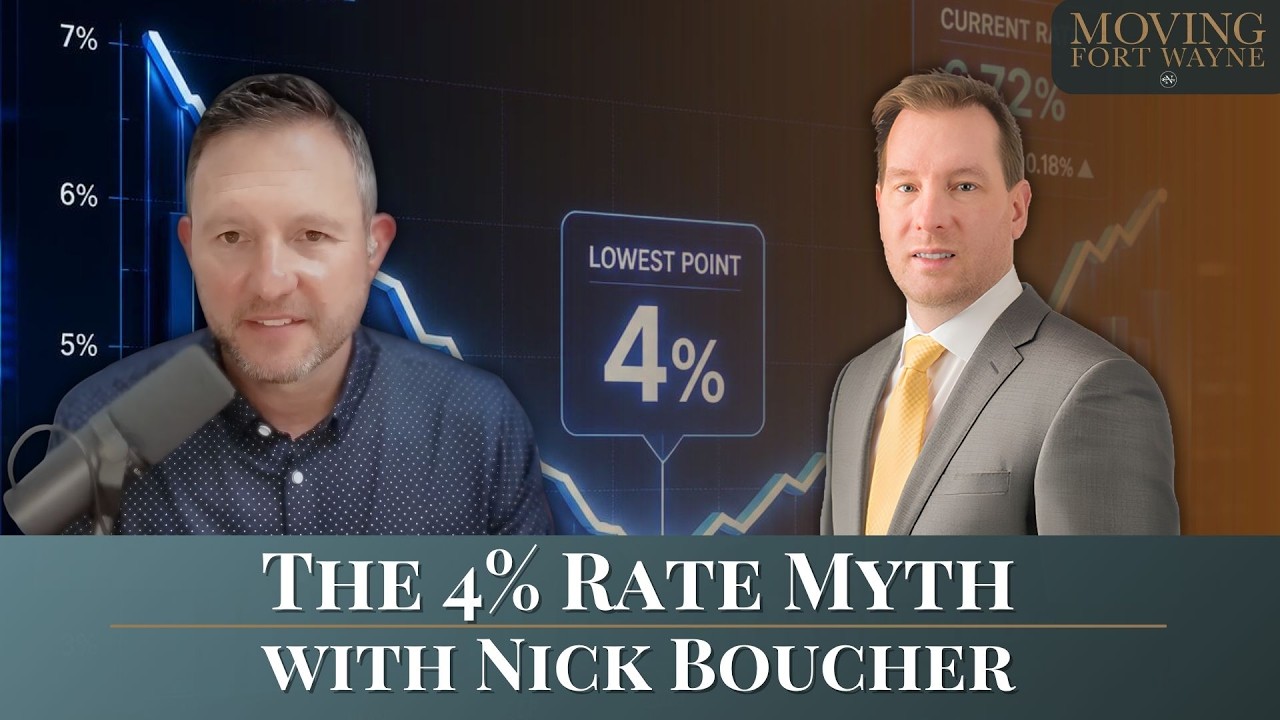
Nick sees the rate worry constantly. Plenty of clients are waiting for rates to fall back to a familiar range before they act. His honest answer: "you could be waiting a long time."
“Sitting around waiting for interest rates to get down to a four percent, five percent, I think is just a fool's errand.”
Nick Boucher
Waiting on Rates Is a Bet You Might Lose
There's a common belief that rates will magically return to the three or four percent range. Nick isn't counting on it. "Nobody has a crystal ball," he says, and a return to those levels may take another major global event to trigger.
Brad frames the trade-off in plain math. If the Fort Wayne and Allen County area sees roughly four percent appreciation a year over the next decade, waiting ten years could mean paying meaningfully more for the same home. As Nick warns, tabling a big decision with no end in sight means "all you're going to end up potentially seeing is higher home prices later."
There's also a hard truth in wanting those old rates back. The low-rate era came with a pandemic before it and inflated prices after it. Wanting the rate means wanting everything attached to it.
The Equity Most Homeowners Are Sitting On
Here's what people don't talk about enough: equity. If you've owned your home for at least five years, there's a strong chance you're holding real money you can put to work.
Brad's read on the local market is direct. Homeowners who have been in place for up to ten years often have at least 50 percent equity, which can mean anywhere from fifty thousand to three hundred thousand dollars sitting on the table.
The problem is that equity is not liquid. You likely don't have that amount in cash ready to fund a down payment. So the strategy becomes: how do you tap it without a costly cash-out refinance, and how do you time the move so it doesn't stress you out?
How to Buy Before You Sell
The strongest position for a move-up buyer is to purchase the next home without making the offer contingent on selling the first. That usually means a stronger, more competitive offer. To get there, two things have to line up: your qualifications and your access to equity.
Debt-to-Income Ratio, Explained
Two people with the same job and the same income can qualify for very different homes. The difference is debt load. Nick compares it to golf: "it's like a handicap in golf isn't it."
Car loans, student loans, and credit card balances all eat into your buying power. As Nick explains, debt-to-income is "money coming in versus your obligations and debts that you have to service each month."
The typical DTI cap runs just under 50 percent. So for a household earning ten thousand dollars a month in gross income, roughly five thousand can go toward debt and the new house payment. Just because you qualify for the top of that range doesn't mean you should live there. Brad's grandfather put it best: make sure buyers have "enough room for pizza and ice cream on the weekends" after they buy. Nobody wants to be house poor.
Bridge Loans and HELOCs
If you don't have liquid cash for the down payment but you do have equity, an alternative financing product can extract it. Nick points to two options.
- A HELOC, or home equity line of credit, typically carries a ten-year draw period, is usually interest-only and variable, and can take longer to close.
- A bridge loan is built for exactly this purpose. It bridges the gap to fund a new purchase, usually closes faster, and often carries a fixed rate. These are commonly paid off within two to five months.
To buy without selling, you need the capacity to carry all three products at once: your current mortgage, the bridge loan or HELOC pulling out equity, and the mortgage on the new home. Your debt load determines whether that's possible.
The Recast: Lower Your Payment After You Sell
This is the piece most buyers have never heard of, and it changes everything.
Say you put the minimum down on your new home. As a non-first-time buyer, that can be five percent. A month or so later, your old home sells and you collect the net proceeds. Nick is careful with the language here: "I don't like to call it profit, I call it proceeds."
You then apply a lump sum toward your new mortgage's principal and request a recast, also called a re-amortization. The lender recalculates your monthly payment as if you had put that larger amount down from the start. There's usually a small processing fee, far less than the cost of a refinance.
If you had PMI because you put five percent down, you can shed it too. The key, Nick stresses, is that you "have to make a request in writing to have borrower initiated early PMI or mortgage insurance termination." Done right, it's "as if they put 20 down from the very onset."
One critical caveat: recasting is a conventional loan feature only. "None of the government products allow for that," Nick notes. Even a large lump sum won't let you recast an FHA loan.
What Nick Would Tell His Own Family
Asked how he'd advise a family member looking to move up, Nick doesn't hedge. If they have enough for a minimum five percent down payment sitting liquid, his guidance is to move ahead.
"Sitting around waiting for interest rates to get down to a four percent five percent I think is just a fool's errand," he says. The forecasters have been wrong for years, and no one can time it.
His full playbook: put five percent down on the move-up home, take advantage of the appreciation sooner rather than later, and once the old home sells, do a recast to bring the payment to a manageable level. And if you can afford to keep the first home, it can become an investment property, another way to build wealth in real estate.
FAQ
Should I wait for interest rates to drop before moving up?
Probably not. Nick calls waiting for a return to four or five percent "a fool's errand" because no one can predict rates and the experts have been wrong for years. Meanwhile, home prices in the Fort Wayne area continue to appreciate, so waiting often means paying more later.
How do I buy a new home before selling my current one?
You need to qualify to carry both mortgages, plus any product used to pull out equity. If you have the debt-to-income capacity and enough for a minimum down payment, you can make a stronger, non-contingent offer without selling first.
What is a mortgage recast and how does it work?
A recast lets you apply a lump sum, at least ten thousand dollars, to your new mortgage's principal after your old home sells. The lender recalculates your payment as if you'd put that money down originally, for a small processing fee. It's only available on conventional loans, not government products like FHA.
What's the difference between a bridge loan and a HELOC?
Both let you access equity, but a bridge loan is designed to fund a new purchase, usually closes faster, and often carries a fixed rate. A HELOC typically has a ten-year draw period, is interest-only and variable, and can take longer to close.
▶ Listen to the full episode
Market Update and Rates with Nick Boucher from Ruoff Mortgage, on Moving Fort Wayne.
Work with the Noll Team
Ready to make your move?
Since 2003, Noll Team Real Estate has been helping people in the Fort Wayne area find the freedom to live the lifestyle they want. Tell us where you are headed and we will build the plan around your life.