
Habitat for Humanity Fort Wayne: Building Homes
Community · From Student of the Game
Habitat for Humanity Fort Wayne: Building Homes
Ever wonder what actually happens between a donor writing a check and a family getting the keys to their first home? It is not a handout, and it is not simple. It is a carefully built bridge of relationships, sweat equity, and consistency.
On Episode 73 of Student of the Game, host Brad Noll sits down with Christine Lyons, Manager of Philanthropic Partnerships at Habitat for Humanity of Greater Fort Wayne, to pull back the curtain on how affordable housing in Fort Wayne really gets built. This post breaks down the model, the mindset, and the fundamentals behind the mission.
If you are an entrepreneur, a leader, or anyone who cares about how homeownership changes lives, this one is for you. Christine has over 20 years of business development experience and a lifelong tie to Habitat that started in high school, and her lessons on consistency and relationships apply far beyond the nonprofit world.
How Habitat for Humanity Fort Wayne Builds Affordable Housing
The scale of the work surprises people. Habitat for Humanity of Greater Fort Wayne expects to build roughly 30 homes this year, spread across Allen County, Huntington, and eventually Wells County once land is secured.
Much of that work has centered on Renaissance Point on the southeast side of Fort Wayne, where Habitat has spent the last four or five years revitalizing the neighborhood. By the time it is finished, Christine estimates about 12 million dollars will have been invested into that community.
“That kind of started my appreciation for volunteering. It brings a joy that I can't explain when you help other people.”
Christine Lyons
The Model Is Ownership, Not a Handout
This is the point Christine wants people to understand most. Families purchase their homes with a 30-year mortgage at three percent, supported by local banks. They also complete sweat equity hours, volunteering on the job site, at the ReStore, and at other local nonprofits.
Those hours include financial literacy classes, where families learn what a mortgage is, how escrow and taxes work, and how to maintain a home. As Christine explains, many are generational renters who never had the chance to learn those things. The result is not just a house, it is a homeowner set up to succeed.
The Real Math of Affordable Housing in Fort Wayne
When Brad pressed on affordable housing, one of the biggest conversations in America right now, the numbers made the case. Around Fort Wayne, families are often used to paying roughly 1,450 dollars a month in rent, and Brad notes it is hard to find a rental under 1,200 to 1,300 dollars.
A Habitat mortgage on a three or four bedroom home lands near 750 dollars a month. That is a dramatic drop, and it comes with instant equity in a brand new home.
The difference is the point. As Christine put it, the goal is sustainability, teaching families to budget and setting them up to keep succeeding as homeowners long after they move in.
Mastering the Fundamentals: Consistency and Communication
Student of the Game is built around mastering the fundamentals, and Brad asked Christine what is fundamental about development and fundraising. Her answer was clean.
"Well you have to be consistent and you have to communicate and do what you say you're going to do," Christine said. That principle carries every day, whether she is following up with a donor, telling the mission's story again, or standing on a job site.
Invite People Into the Mission, Do Not Just Ask for Money
Christine is clear that transformation does not happen with a single ask. She describes the journey as a circle that often starts with a volunteer experience on a job site, working alongside a future homeowner, then grows into deeper involvement over time.
Brad reinforced the danger of the transactional approach. As he described it, if you only meet people to close a donation or a sale, "nobody wants to talk to me because they see it coming." Relationships come first, results follow.
Walk the Walk
Christine practices what she preaches. She is a monthly donor to the organization she represents, which Brad summed up simply: "you're walking the walk." When you believe in a mission, you put your own hand in it first, and that credibility is what makes the ask land.
Leadership Lessons from the Job Site and the ReStore
Leading volunteers, Brad joked, can feel like herding cats. But Christine says the crew leads and construction site managers actually prefer volunteers with no experience, because they can teach the work the right way. Their standards are rigid: if a stud is wrong or a nail is off, they redo it.
That intentionality ties back to the same fundamental, communication. As Brad noted, one of his mentors, Donald Miller, frames it this way: "communication is an exercise in memorization if the person doesn't memorize what you just said you didn't communicate."
The ReStore, a Hidden Gem
The ReStore is one of Habitat's biggest fundraisers. Christine compares it to what you would get if a Menards and a Goodwill had a baby, located across from Donner's Honda next to Nissan on Lima Road.
Community members donate cabinets, flooring, furniture, fixtures, and vintage finds, and Habitat will schedule pickups online, even after estate sales. Every purchase supports the mission, making it an easy first step for anyone who wants to get involved.
Why Vision and Relationships Win at the Game of Life
Christine credits new CEO Melissa McCowan with the vision to bring the team under one roof, a space that now includes a classroom for financial literacy courses and a family room where single parents can bring their kids.
Brad connected that to a bigger truth, quoting Solomon: "where there's no vision the people perish." Christine's own vision is expansion into more counties, because more counties mean more housing, more families, and more kids with a stable place to grow up.
That impact is personal. Christine shared the story of a 10-year-old boy in Huntington County who, after closing on his home, was asked what he was most excited about. His answer stopped everyone: "I'm just excited I have an address."
Frequently Asked Questions
How does Habitat for Humanity Fort Wayne work?
Families purchase their homes with a 30-year mortgage at three percent through local banks. They complete sweat equity hours by volunteering on job sites and at the ReStore, and they take financial literacy classes covering mortgages, escrow, taxes, and home maintenance.
How do you apply to be a Habitat homeowner in Allen County?
Everything is on Habitat's website, and the Allen County application process opens once a year, typically the first two full weeks of January. Wells County is more ongoing while land is still being secured, and Huntington's window had recently closed after receiving many applicants.
What is the Habitat ReStore in Fort Wayne?
The ReStore is one of Habitat's largest fundraisers, selling donated home goods like cabinets, flooring, furniture, and fixtures. It sits on Lima Road across from Donner's Honda next to Nissan, and Habitat will schedule pickups online for accessible donations.
How can a business owner get involved with Habitat?
Christine recommends starting with a discovery meeting to find out what inspires you. From there, involvement can look like a volunteer build day, a monthly donation, a gift-in-kind partnership, or connecting employees to the homeowner program.
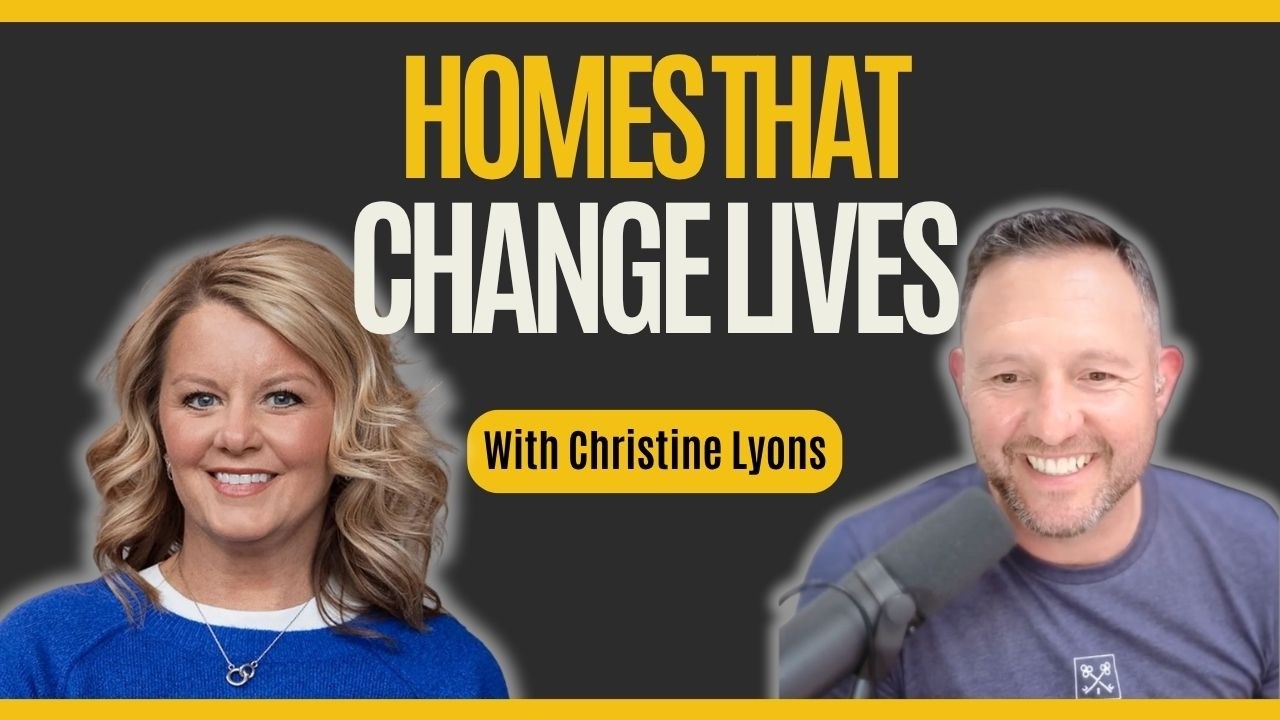
▶ Listen to the full episode
Building More Than Houses: Christine Lyons on Impact, Fundamentals, and Affordable Home Ownership, on Student of the Game.
Work with the Noll Team
Ready to make your move?
Since 2003, Noll Team Real Estate has been helping people in the Fort Wayne area find the freedom to live the lifestyle they want. Tell us where you are headed and we will build the plan around your life.