
Is 2026 the Year to Move? What Fort Wayne Homeowners Should Know
Market Update · From Moving Fort Wayne
Is 2026 the Year to Move? What Fort Wayne Homeowners Should Know
As 2026 got started, Brad Noll kept hearing the same question from clients and friends: is this the year to make a move? People want to know what is happening with inventory, interest rates, the economy, and politics. On this episode of Moving Fort Wayne, recorded in January with a foot of snow outside his office window, Brad takes on that question, and his answer starts with life rather than the headlines.
"We believe people move because life changes, not because the market does," Brad says. The market will always shift. More homes will come on, and rates will go up and down. But in Brad's experience, the real reason people move is that the home they are in no longer fits the life they are living.
Three Beliefs That Guide Every Move
Brad lays out three core beliefs the Noll Team shares with clients. First, people move because life changes, not because the market does. Second, winning in real estate comes from planning and preparation, not impulse. Third, the team's role is to guide a life transition, not just complete a transaction.
On the second point, Brad looks back at the COVID years, when historically low rates led about 30% of people to move simply because they wanted a different house and it was cheaper. In reality, he says, about 10% of moves are impulse decisions and 90% come from lifestyle changes. That is why so many of the team's early 2026 conversations are about building a plan.
"I'm in the lifestyle business," Brad says. When your lifestyle changes and your housing needs to change with it, that is when a conversation makes sense.
“We believe people move because life changes, not because the market does.”
Brad Noll
What the 2026 Data Says
Brad does not want anyone deciding on feelings alone, so he looks at what sources such as the National Association of Realtors, HousingWire, Redfin, Homes.com, and Realtor.com are saying. Their forecasts differ, but they are largely aligned on a few themes, and many describe the market as back to something like 2019, when buyers had time to make choices and sellers had some competition.
- A normalizing market. "It's not a boom. It's not a bust," Brad says. Homes that are priced well will still draw multiple offers, and more buyers are expected to enter the market.
- Rates expected to gradually ease. Brad does not expect a return to artificially low numbers, but gradual easing improves affordability.
- Pent-up demand. Brad notes that in recent years the U.S. has had about the same number of real estate transactions as in 1993, with 80 million more people.
For sellers, a normalizing market means more competition. For buyers, it means more choices, though the busy spring months may still bring multiple offers. A buyer touring homes on a snowy January day, Brad points out, may not face much competition at all.
First-time buyers matter here. When they buy at the entry-level price point, Brad says, it gets the rest of the market moving, like clearing a clogged pipe. Many young adults are still living with their parents because buying took a lot of cash when rates were low, and once rates rose they did not like the payments. Brad's advice to parents is lighthearted but sincere: introduce them to the team, because you deserve your empty nest season.
On rates, Brad shares his own experience. He and his wife have been in their home 18 years and have refinanced five or six times as rates, programs, and their circumstances changed. Nobody is stuck in a rate or a program forever.
Life Events Drive the Market
Brad points to Dr. Lawrence Yun of the National Association of Realtors, one of the most quoted voices in housing economics, who has consistently said housing is driven by life events. Brad says Yun also expects transaction volume to rise somewhere between 10 and 14% this year. Brad's takeaway: "It means the market follows your life, not the other way around."
The life events behind most moves are familiar:
- A growing family that needs more space
- Remote work that changes what a home needs, such as two home offices
- Kids moving into new schools
- Parents moving closer to help with grandkids
- Downsizing after a big season of life
- Wanting walkability, more land, or less maintenance
Walkability came up with a listing the team had just put on the market in the historic West Central district, where residents can walk to the river, shops, restaurants, and farmers markets in downtown Fort Wayne.
Why January Is a Smart Time to Plan
Brad believes January and February are some of the smartest months to start planning. Goals are fresh, finances are visible, and people feel like they have a little more time. Not every change can be planned, he acknowledges, such as a loss in the family, a divorce, or a job loss. But when a lifestyle change is on the horizon, early planning brings clarity, and "planning doesn't mean committing." Many clients simply want to talk it through at the kitchen table.
Brad sees a big difference between reactive moves and intentional ones. Reactive moves sound like "we need to move fast" or "let's just see what happens." Intentional moves start with reflection: what season are we in, what do we want next, and what is the right sequence? Should we sell first, buy first, or build? Many people do not know their options, especially if they last moved 15 years ago.
Planning early leads to stronger negotiation, better financial outcomes, cleaner transitions, and less emotional stress. Brad likes to ask clients which scenario would create the least stress for their family. Avoiding common mistakes such as overpricing, under preparing, and rushing decisions keeps money in their pocket.
Why Introductions Matter
The Noll Team runs a relationship-based business, and Brad explains that he cannot truly help someone with their home without knowing why they are moving. The best outcomes come from conversation, collaboration, and staying curious, like asking a buyer what a big kitchen means to them. Early introductions let the team plan the timing, coordinate buying and selling, understand financial questions such as using equity before a sale, and connect clients with trusted lenders, builders, designers, and financial advisors.
"I tell my kids all the time, preparation creates separation," Brad says. Separating yourself from impulse decisions in the market takes preparation, and that is what the team wants to help with.
Is 2026 the Right Year for You to Move?
Brad's honest answer is that he does not know. What he does know is that a conversation is the right first step. For many people, 2026 will be the year to start planning, ask better questions, and align their housing with their life.
After 23 years in real estate, Brad says nobody actually wants to move. "Everybody wants the outcome," he says. Packing boxes is nobody's favorite part, but with a plan the outcome is worth it. If you or someone you know is going through a lifestyle change, he encourages starting with that conversation.
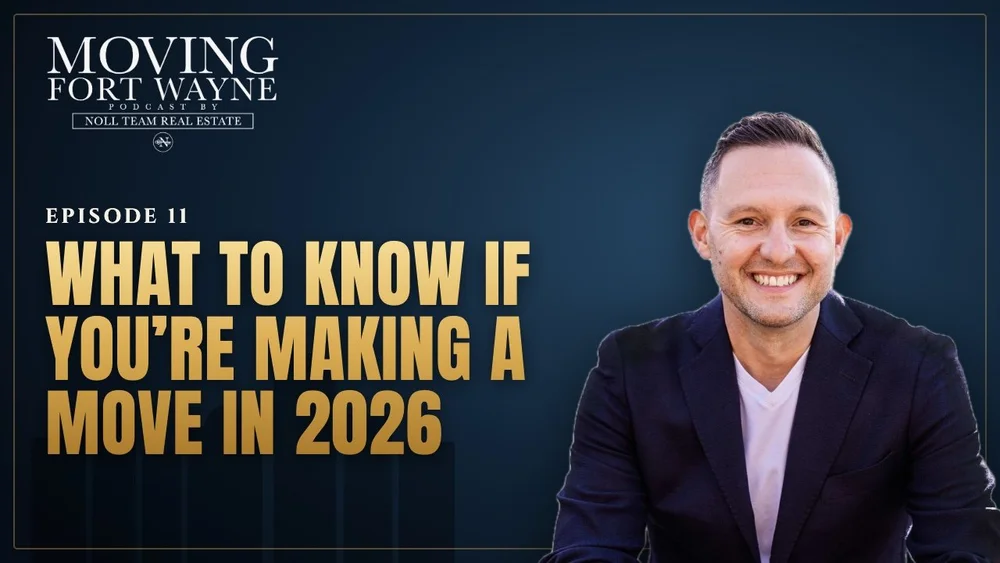
▶ Listen to the full episode
What To Know If You’re Making a Move in 2026, on Moving Fort Wayne.
Work with the Noll Team
Ready to make your move?
Since 2003, Noll Team Real Estate has been helping people in the Fort Wayne area find the freedom to live the lifestyle they want. Tell us where you are headed and we will build the plan around your life.