
Profit First for Small Business: How Brad Noll Manages Money
Entrepreneurship · From Student of the Game
Profit First for Small Business: How Brad Noll Manages Money
After his Student of the Game conversation with Brian Lessinger, the Reno realtor behind the YouTube channel The Complete Money Playbook, Brad Noll sat down for a solo Huddle to unpack what he heard. He starts with a reminder he has learned to love: he doesn't have to be the only one teaching his kids, his team, or his clients. Sometimes his friends have the information, and his job is to share it.
This Huddle is about money, specifically how small business owners can stay profitable. Brad shares the system he has used for years, walks through five tips from Brian, and adds plenty of his own lessons along the way.
Act Your Wage: Revenue Is Not Income
Brad opens with a phrase that shaped him early: act your wage, not your age. Then he names the mistake he sees most often in small business. Owners confuse revenue with income. Everyone talks about making six figures, but in business that number is revenue. What is left over is income. If you have ever reached April 15th without enough set aside to pay your taxes, you know the difference.
He also points to a classic book, The E-Myth, which explains why many small businesses struggle. A baker who makes amazing pies decides to open her own shop, but she may not have the skills of advertising, hiring, time management, or finance. The technician becomes a business owner without training to run a business, and managing money is a huge part of that job.
Brad admits he struggled with money for a long time, partly because he didn't know who to talk to. About seven years ago he found Mike Michalowicz and his book Profit First. He credits the book for much of his success, because it taught him that not everything he earns is his to keep and spend.
“If you have a goal that you cannot track, that's not a goal. That's a wish.”
Brad Noll
The Four Pillars, Played on Offense and Defense
Brian's first tip is to master the four financial pillars: earning, spending, saving, and investing. Brad, who says he got a master's degree from the locker room, thinks of money like a basketball game. Saving is defense. Earning is offense. A game that ends zero to zero has no winner.
He once asked a successful mentor which mattered more, earning or saving. The answer was earning, because you can keep growing income but you can only cut expenses so far. You still have to eat and live somewhere. Brad calls his savings account the peace of mind department, and he believes business owners need more savings than people with steady paychecks because business moves in cycles.
He also looks at money in terms of time. If two people each have $10,000, but one spends $10,000 a month and the other spends $1,000, one has a single month of money and the other has 10 months. He quotes Warren Buffett: "Do not save what is left after spending, but spend what is left after saving."
How Profit First Works
Brian's second tip is financial accountability and awareness. Write down every source of income and every expense, and look for places to cut, improve, and grow. Profit First flips the traditional formula. Instead of sales minus expenses equals profit, Brad says, "I believe that sales minus profit equals expenses."
Knowing where you start matters, too. Brad asks his kids how long it takes to drive to Florida. They give him a number of hours, but the real answer depends on whether you leave from Fort Wayne, Dallas, or Los Angeles. Goals work the same way. "If you have a goal that you cannot track, that's not a goal. That's a wish," he says. And "more" is not a goal.
Brian's third tip, separating business and personal finances, is one Brad learned from his longtime mentor Brian Buffini. A few years into real estate he set up an LLC and began paying himself a salary. Today his business uses the account structure Profit First recommends:
- A revenue account where every sale lands first.
- A profit account, funded before anything else.
- An owner's compensation account for the owner's salary.
- A tax account that is never touched for payroll, marketing, or client events.
- An operating expense account for running the business.
- Transfers on the 10th and 25th of every month, following the book's percentages, with a profit distribution each quarter.
The reason for all those accounts is Parkinson's law. Work expands to fill the time available, which is why a paper due Friday gets written Thursday night. Michalowicz applies the same idea to money: expenses rise to meet the money available. Brad calls himself the spender in his marriage and his wife, Lindsay, the saver. "When I have a system, nobody can stop me," he says. And when there is less left, like the end of a tube of toothpaste, people get resourceful.
Talk About Money, and Play the Long Game
Brian's fourth tip is to start conversations about money. Brad noticed people are comfortable talking about money with those behind them but not with those ahead. What changed things for him was a group of realtors from around the country who met every Wednesday morning on Zoom to work through Profit First. They got comfortable saying things like, "I haven't made a sale in a while and I've got payroll coming up." Iron sharpens iron.
The fifth tip is to play the long game. Brad now has two decades of data, and looking back at it keeps him grateful instead of focused on what he doesn't have. He describes himself as content but never satisfied. Celebrating small wins, he says, helps you keep your discipline.
Should Small Business Owners Reinvest Their Profits?
Brad's answer is no. Reinvest your revenue, but take your profits. He believes owners who keep pouring every dollar of profit back into the business are headed for burnout. Small, consistent profits also smooth out cash flow, which matters in businesses with big swings, like an attorney who lands one large case or a landscaper heading into a winter without snow.
His grandfather described real estate as chickens and feathers: some months you get the chickens, and some months all you get is feathers. If it feels like feathers right now, Brad says, put your head down, build relationships, and connect with people.
Profit is also what pays for life. He and Lindsay keep an experience account, which bought his new golf clubs this summer without a long debate. He is closing in on his 500th Peloton ride and hopes to celebrate it in the studio in New York with his family. As he puts it, wealth comes from having few wants, not great possessions, and a small business owner should be able to enjoy the work.
▶ Listen to the full episode
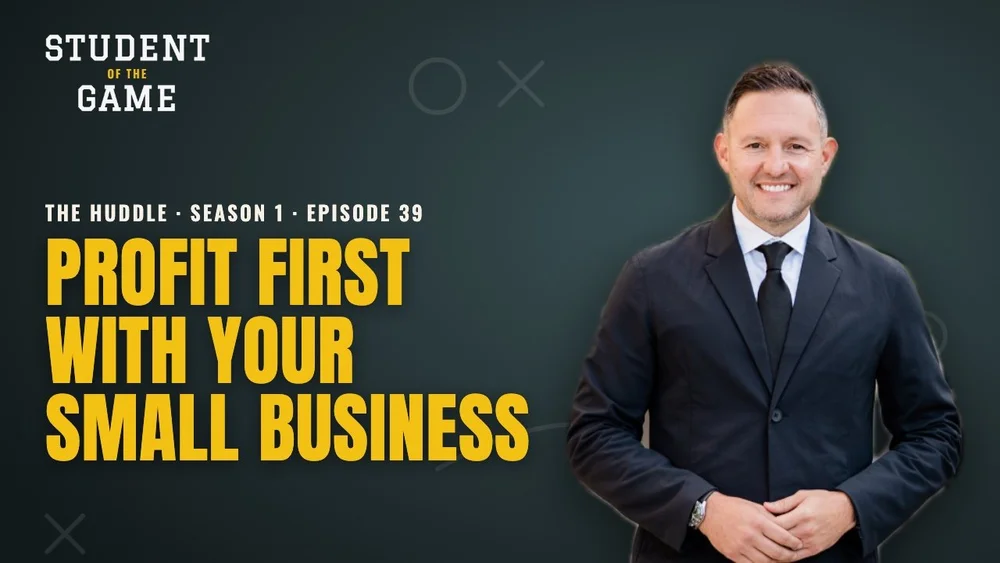
The Huddle with Brad Noll: Profit First with Your Small Business, on Student of the Game.
Work with the Noll Team
Ready to make your move?
Since 2003, Noll Team Real Estate has been helping people in the Fort Wayne area find the freedom to live the lifestyle they want. Tell us where you are headed and we will build the plan around your life.